Showing posts with label Clare Parker. Show all posts

Friday, 24 January 2020

A powerful guest blog

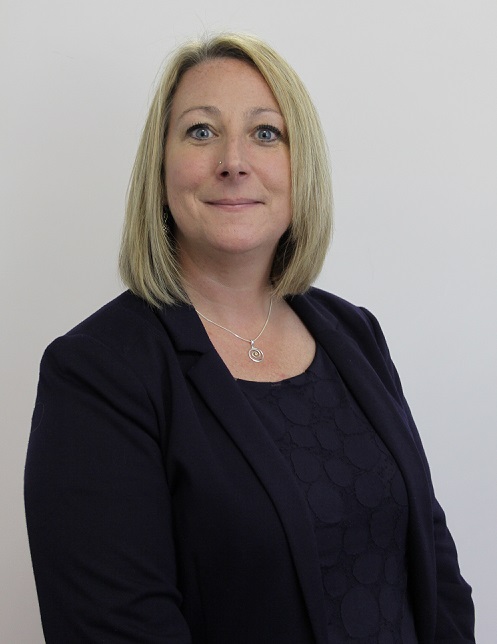
We’ve got a powerful guest blog this week from Clare Parker, our director of nursing, healthcare professionals and quality governance.

Talking about our own personal experience can help reduce stigma and make it OK to talk about mental health issues, so many thanks to Clare for being so open and sharing her story.

Best wishes,
Claire

Claire Molloy, chief executive

****************************************
Do we really know the people we work alongside each day? 
Here's me with my grandad

Often we can spend many hours working closely with people, but never really take the time to get to know them or take an interest in what is going on for them, perhaps over a cup of coffee. 

How do we know when people are going through celebrations or challenges in their family and personal life?  And how do we offer support, kindness and compassion at work?

One thing that people might not know about me is that nearly two years ago, my 96 year old grandad took his own life. He had been widowed 18 months previously following the death of my 94 year old nanna, who died of motor neurone disease. 

On the anniversary of his death last March, I posted on twitter to raise awareness of older people’s suicide and, just before Christmas, I made a decision to take part in a Schwartz round, as the theme for the day was ‘suicide awareness’. 

To sit in front of my colleagues and share my story was not an easy decision for me. It is an emotional and personal story, but one which I feel passionately about sharing to keep raising awareness of this challenging topic. 

I don’t mind admitting that I did become tearful as I shared  how I had always looked up to my grandparents, how they had given me so many fantastic memories and how one of the lessons they gave me was to “make the most of life and the experiences it can bring”. 

They were strong advocates of making memories, rather than collecting things, and they themselves travelled the world and certainly enjoyed and lived a full and rewarding life together. 

The impact of my grandad’s suicide has been very different for each and every member of my family, but for me it has been important to reflect on, recognise and celebrate the lives of my grandparents.

In my day to day role in our Trust, suicide is something I have to read about, talk about and think about on a weekly basis.  It is so important to think about the families, our staff and wider teams and communities who are affected by each and every suicide. And to remember it is something we should talk about and consider how it impacts our colleagues, so we can offer support and compassion, and even a shoulder to cry on, at times. 

Alongside me on the panel were two amazing and inspiring colleagues, who also shared their personal and emotional stories. It reminded me that it is the people around us - our family and friends, but also our work family - who contribute to how we behave, think and feel. 

Experiences we have both in and out of work contribute to our own health and wellbeing and the people we work alongside contribute to that enormously. 

A reminder that we all need to make sure we look after ourselves, as well as other people around us.  So try to make time to have that cup of coffee with a colleague.

Best wishes,
Clare Parker

Friday, 15 March 2019

Guest blog on our new Just Culture approach

Clare Parker
Executive director of
nursing, healthcare professionals
and quality governance
Your best teacher is your last mistake.

That was my opening message for our Just Culture conference last week. I also talked about Tom Hanks and an error I made which has stayed with me. But more of that later.

Almost 200 staff packed the room to hear about our new Just Culture initiative, which is ultimately all about improving patient care. We also had the honour of welcoming Dr Bill Kirkup CBE as our guest speaker.

Bill was Chairman of the Morecambe Bay Investigation and has previously led investigations into the Oxford paediatric cardiac surgery unit and Jimmy Savile’s involvement with Broadmoor Hospital, as well as being a member of the Hillsborough Independent Panel. He spoke about his experiences and eradicating a blame culture in a honest, moving and inspiring speech.

Although a Just Culture approach is already being used in the airline and nuclear industries for example, it’s new to the NHS and I’m proud that we’re one of the first Trusts in the country to adopt it.

It’s basically based on an approach where staff aren’t blamed for honest errors. Instead we feel supported and encouraged to come forward and share our experiences to allow lessons to be learned. It aims to get to the heart of what, not who, was responsible for the error. 

Healthcare is risky; it always has been and always will be. When humans interact with humans its always complex, and in addition to that, we have limited resources and often have to make speedy decisions in a fast paced environment.

So mistakes are a fact of life, but they are an opportunity to learn.

No-one likes owning up to mistakes, and it’s even harder when people are harmed.   How we respond and learn from when things don’t go as we would have liked is fundamental to good patient care.

When an incident or near miss happens, it’s incredibly rare that it was intentional, malicious or someone not learning from mistakes. So supporting people positively is the only way we can make progress.

Often when we investigate, we miss the human factor. If you’ve seen Tom Hanks in the brilliant film Sully, which is about the pilot Chesley Sullenberger who dramatically landed his plane on the Hudson River in New York, saving all 155 passengers, you’ll know what I’m talking about.

If you’ve not seen this film, I highly recommend it. Not only is it a thrilling film, but within it is a powerful message about human factors.

Everything is unprecedented until it happens for the first time.

I pride myself in engaging and involving people, but I will always remember in a previous job when I met with a family to talk about our response to their complaint about one of our nurses.  Three days later I received an email from the nurse who was upset that I had never met with her or told her what I was going to say to the family. She felt her reputation, built over many years through consistently good care, had been ruined because of this complaint.

Her email floored me. She was absolutely right and I arranged to meet her and apologised. I used it as piece of reflective practice for my revalidation, and told the nurse I was doing this. 

I certainly learned from this and it has influenced my practice ever since.

There’s no easy or quick fix to eradicate a blame culture, but a positive and open workplace culture, with trust and respect among colleagues can help. This will form part of the wider piece of work around our culture and values.

We’ve got over 5500 staff and we care for thousands of patients every month, so we also need to always remember to put any incidents in context. Amazing work is taking place every day which is changing people’s lives.

We mustn’t carry our mistakes around with us, or jump to a blame game, but use them as stepping stones for us all instead.

Best wishes
Clare
Clare Parker
Executive director of nursing, healthcare professionals and quality governance