Showing posts with label healthcare. Show all posts

Friday, 8 December 2017

Delivering on our intent

I’d like to start off by saying thank you to everyone who took the time to read or respond to last week’s blog – it has been viewed nearly 1600 times and I have received direct feedback and comments from around 40 members of staff.  

If you haven’t read it, the post basically talks about how we need to strike a better balance between the capacity and demand on services, so we no longer compromise on quality standards.  Too often our services are being stretched too thinly to meet increasing demands.   It obviously struck a chord with many of you and I am very appreciative of you taking the time in your busy working lives to read the blog and comment. We just have to deliver on this intent now!

As I mentioned, we have started to address these issues with commissioners and a key meeting is being held next week between our executive team and the chief officers from our clinical commissioning groups to discuss the approach we would like to take and to put some stakes in the ground. We need to find ways of supporting our managers and clinical leaders to have some of these conversations too, within a framework but knowing we have your back.  Whilst it may involve complex negotiation, I am determined that we will be driven first and foremost by quality standards that ensure our services are safe.  

Because we know this will involve transformational change, we need to find ways of bringing the leadership of the organisation together to have those difficult discussions about how to tackle our financial challenges in such a way that we don’t compromise quality. To support our collective leadership, I will be holding a workshop next week involving our managing directors and senior leads to agree how we will approach this. As you know, the Board has agreed to run a deficit for this year and next and we know we can’t improve the financial position by simply top slicing budgets further and further. But we do need to explore how we can deliver our quality aspirations in an affordable way.  

The Board and the Council of Governors had a workshop this week to go over some of the Trust’s main priorities.  I have talked about these in my blogs before, but this includes:
  • being clearer about our long term strategy; 
  • implementing priorities around quality, people, partnerships, money and infrastructure; 
  • and changing the way the organisation is run to create a positive culture of learning and improvement.
It was a welcome opportunity to work more closely with our Governors as representatives of people who use of our services and it was helpful to listen to their views.  We had a particular focus on progress on delivering our CQC Improvement Plan and in particular, the need to address mixed sex accommodation issues on our mental health wards. I am keen to ensure we continue to have an open, co-production approach with the Governors, involving them in future service redesign.

Finally, because I had such a good response to the last blog, I am really keen to hear from staff about what other topics you think are important.  Whilst my blog is an opportunity for me to tell you what I’m up to, it is a platform for you to ask for comment or feedback on burning issues.  If you have anything you think staff would like to know more about, do drop me an email to let me know. 

Many thanks
Claire  

Claire Molloy
Chief Executive 

E: ceo-penninecare@nhs.net
@ClaireMolloy2

Friday, 1 December 2017

No more compromises on quality

Over the last few weeks I’ve been hearing some pretty strong messages coming from staff about the pressures they are under, facing increasing demands and a never ending flow of referrals.  From talking with clinical leaders and managers at the planning day last week, I heard lots of examples of where services are stretched too thinly and as a result you aren’t able to provide the safe and high quality levels of care you want to.     

We have very caring and committed staff who want to do their very best for people who use our services and I know you have been very accommodating in trying to stretch services to meet increasing demand. But it is not acceptable for our services to be stretching caseloads beyond their means without this being recognised with additional resources. This isn’t good for our staff, it certainly isn’t good for patients and it hides a fundamental problem of a mismatch between the expectations of our services and available resources. 

So what are we going to do about it? 

As a start, we need to be having a different conversation with our commissioners about what we can provide within the resources we are given, as is starting to happen at a national level about the total funding the NHS has.  We should not be trying to meet greater and greater demand, with an expectation we can continue to provide everything we currently do, if this means we are providing a lesser standard of care.  There should be no more compromises on quality. 

In order to change things, we are beginning to have this conversation with our commissioners about the quality, financing and demands of our services.  We have signaled an intent to agree some clear and fixed standards of quality for all of our services and to co-produce with staff and our commissioners a service offer that ensures we can deliver to these standards. 

This may mean not being able to provide everything we currently do. I know how difficult it is for staff to say ‘no’ when all you want to do is provide care and support to everybody who needs it.  But if it isn’t safe or affects quality, then we are going to have some difficult discussions about a different service offer and what we potentially won’t be able to do. So, agreeing these standards, thresholds and pinch points needs to be a clinically-led discussion, in collaboration with our commissioners, service users and local communities.

As a starting point, we are currently working on putting some quality principles into our contracts for next year for those services that are struggling the most, which includes our mental health wards, district nursing and community mental health teams.  This will provide us with a lever through which to start negotiations about what resources these services need in order to meet demand and provide safe, high quality care.  It also means that staff can be clearer about what is and isn’t acceptable and are empowered to escalate when safety or quality is being impacted.  

These improvements won’t happen overnight, but I want to reassure staff that you have the full support of the Board to address the challenges facing you on the frontline.  We need to support you to get back to providing the very best care you can, without compromise. 

I’d be really interested in hearing your thoughts about this, so do email ceo-penninecare@nhs.net with any feedback.

Many Thanks
Claire 

Claire Molloy
Chief Executive 

Friday, 6 October 2017

"Thank you for making me feel so welcome"

It is widely recognised that the first 100 days of a new Chief Executive are really important. It’s that short period of time that you have when people still afford you the luxury of calling you ‘new’ and look with interest at your approach and style. It is also a time when you are most able to be open about what is needed going forward, influenced by people who work in and with the organisation.

I am obviously only a short way into my first 100 days so it’s still early days. However, as I near the end of my fourth week with Pennine Care, I thought I could usefully share some reflections of my first 100 hours in post.

I have had a lovely warm welcome – everyone has been friendly and positive about me being here, which always helps!  So, thank you for making me so welcome.

I have also been struck by what a hugely talented and committed workforce we have. I attended the Annual General Meeting last week and was simply blown away by the enthusiasm and passion of the teams and individuals talking about their services on the stalls in the market place. And then the CARES Awards themselves were just so moving and inspirational. I watched the videos of the divisional winners being quite in awe of the effort that people were going to and the massive positive impact this had for people at the heart of those services. I only managed not to shed a tear or two with the pure emotion they evoked by dint of being in a public place!  

The fact that it was such a hard task selecting the winners and that we had 61 applications means that across the organisation we obviously have some brilliant teams and services which we need to find ways of hearing about and recognising.  Because, as I said in my welcome video, if we get it right for staff we will probably get it right for people who use our services. This will form a key underpinning principle of my approach going forward, with a strong focus on creating a positive, open and learning culture, where we make it easy for people to do their jobs and make the most of the talent we have.

We know the improvements we need to make on the back of the CQC inspection and are committed to these, but we also need to create an approach to innovation and improvement more widely. There are undoubtedly lots of pockets of great practice and support available to help people with improvement work. What I see as a priority is bringing this together in a clear way so that this becomes the way we do things around here.

I’ve been spending time meeting people inside and outside of the trust.  For me, these early days are a crucial time to learn, absorb and reflect.  I’ll be spending a day visiting services and leadership teams in each locality over the next few weeks.  My first visit was in Trafford yesterday and it was fantastic to hear about their integration journey for bringing together adults and children’s health and social care services. 


I am also delighted to have announced the appointment of our new Trust Chair, Evelyn Asante-Mensah.  Evelyn is an outstanding candidate and brings a wealth of different experience to further enhance our board.  This new leadership signals an important change for Pennine Care and together we will build on the Trust’s strengths, whilst also considering a new future direction and different ways of working.  It is a very exciting time for Pennine Care!
   
Thank you for taking the time to read my blog, I’ll be posting further blogs and updates about things I am looking at over the coming weeks.

Best wishes
Claire

Claire Molloy 
Chief Executive

Twitter: @ClaireMolloy2
E: ceo-penninecare@nhs.net

Monday, 10 July 2017

An example of integrated care – my visit to ORCAT

We hear a lot about health services changing to become more ‘integrated’. Put simply, this means working closely together so the care patients receive is more joined up.

At Pennine Care, we are working with partner organisations across our footprint to integrate more services and improve patient experience. I recently visited the ORCAT service – a perfect example of this.

ORCAT (or Oldham Rapid Community Assessment Team) was set up by the Oldham Urgent Care Alliance. Pennine Care is a key member of the alliance, which is a partnership of 10 health, care and voluntary sector organisations developed to improve outcomes for local people by enhancing current services.

ORCAT works closely with colleagues at The Royal Oldham Hospital, including those in the A&E department, to react quickly and prevent people from being admitted to hospital if they can be supported at home with the right professional help. Once at home, the team takes a partnership approach to assessment and care planning to understand what level of support the individual may need to live as safely and independently as possible.

It consists of therapists, nurses, health care assistants and mental health practitioners from Pennine Care NHS Foundation Trust, social workers from Oldham Council, and a Promoting Independence in People (PIP) support worker from Age UK Oldham, who have been brought together to work as one multi-agency team.

As well as preventing people from being admitted to hospital by identifying them early, the team works closely with hospital-based nurses, doctors, discharge coordinators and the RAID mental health liaison team to also support patients who have been admitted to the wards who could be discharged early with the support of the service. 

I met with three members of the team - Cathy, Rachel and Claire – as many others were out and about supporting people at the hospital or in their homes.

It was a really good afternoon; we talked through the service model which was brought to life by patient stories that illustrated the support not only for the patient but for families and carers as well.

Everyone talked about how great the ‘team’ feel was and the fact that each member’s contribution was of equal value to the end outcome. The team really valued the input of the Age UK PIP worker, which makes a huge difference to the team’s success.

The team has worked very hard to build relationships with colleagues in the local hospital and over the past few months things have really moved on in terms of embedding the service.  However, they acknowledged there is still some way to go with raising profile for GPs, so that they understand the potential for people to be supported at home by the team. The GPs who they do work with are really impressed with the support the team is able to mobilise at pace and the range of issues that they are equipped to deal with. 

There were, of course, a few frustrations felt by the team – these were mostly around the type of things that can add delay to discharges. Overall, it was lovely to hear that all three staff were enthusiastic, energetic and said they really enjoyed their job and went home knowing that they’d made a real difference to someone’s life.

While I was there, I noticed a compliment that had been sent in by a relative. With the team’s permission, I wanted to include a snippet of it in this blog as I think it really demonstrates how the team can support people:

“Immediate support following discharge from hospital of my 94 year old father… ORCAT is a fantastic service and were a lifeline to our family. All the ORCAT workers who supported my father combined efficiency and knowledge of care for the elderly with kindness, patience and encouragement. They were excellent. The service is well coordinated, ensuring effective care was in place from day 1 after discharge. This is the health service at its best. *Gold Star*

I went away feeling really upbeat and very impressed with the dedication and values that shone through the staff I spoke with. Thanks to Claire, Cathy and Rachel for meeting with me.

Judith Crosby
Executive Director of Service Development and Sustainability

Thursday, 5 March 2015

In the vanguard of new ways of delivering care

I thought I would do a quick blog to tell you about the latest developments with the NHS England Five Year Forward View or 5YFV as it’s now affectionately known. 

You may have read that NHS England are now looking to develop vanguard sites as part of a 'new models of care programme'.  This is being led by Samantha Jones at NHS England, with the intention of providing a ‘proving ground’ in a number of areas, accelerating development of integrated care.   

The vanguard sites then become templates from which the rest of England learns. This spread and share approach is intended to address the challenges we face in health and social care at pace and scale. Sounds straightforward enough but England faces a challenging five years ahead.

There is a detailed document online about how the 5YFV will be put into action, but look at page 9, 3.3 if you don’t have time to read the whole document, but it is worth a full read

I read through the criteria for applying to be a vanguard site, you had to apply against one of four categories - multispecialty community providers (MCPs); integrated primary and acute care systems (PACS); additional approaches to creating viable smaller hospitals and models of enhanced health in care homes.

I couldn’t see how we fit into any category. I knew we would be part of submissions in at least three of the towns we serve, as part of the partnerships in those towns. However, because I feel we are to an extent uniquely placed as an organisation and because we are pushing so much to transform and advance care, I put one in anyway on behalf of the Trust. To our surprise we were short listed to attend workshops for a final selection process.

I think the staff in Pennine Care should see this as an achievement in itself, 269 areas applied and this was short listed down to just 63. So yesterday Katy Calvin-Thomas, Henry Ticehurst, Richard Spearing and I went down to London to present to the third and final day of the workshops. 

Here is our original submission - please do read this in particular as I think it captures where we are up to as an organisation. It also shows our latest thinking and just how exciting the challenge is we face. Yes exciting. I think we are truly in the vanguard of new ways of providing care. That’s why I put the application in and it was great to be shortlisted.

I’d be surprised if we were selected to go right through to be a vanguard site, as our submission didn’t easily fit. Also, I didn’t think our ‘pitch’ (a seven minute presentation) went very well. I became a bit tongue-tied and nervous trying to squeeze a broad ambitious agenda into a few sound bites. Katy, Henry and Richard rescued it well and I recovered for the question and answer bit. 

I am sharing my experience, which was personally a bit embarrassing, because I think it goes with working outside of our comfort zone. In Pennine Care, many of our staff and leaders are working outside of their comfort zone, working hard under pressure and really pushing the delivery of new and different services. I am grateful for all the work and success to date, its making a real difference to improving care and helping people live as independently and empowered as possible.

Nothing ventured, nothing gained I suppose. And whilst we might not become a first wave vanguard site, we still have an important role to play informing the agenda for new models of care and also the new Devolution Manchester work developing care out of hospital for the city region.

As we always say though, the single most important agenda is getting it right in Pennine Care, that's with partners and working well with staff and patients to deliver new integrated models of care. After yesterday, listening to some really excellent presentations, I know we are definitely on the right tracks and in some areas ahead of the game. Our staff can rightly feel proud of what they are achieving in the pursuit of improving the health outcomes of the communities we serve.

I do think that NHS England and the new models of care programme should be congratulated for the approach taken to securing vanguard sites. There was some criticism of the process, around how the voting worked, whether it was a fair approach but it was a lot fairer than years gone by, when decisions were made behind closed doors and within networks that weren’t accessible. 

I spoke with Samantha Jones afterwards and she was open and interested in the work we are doing in Pennine Care. NHS England Chief Executive, Simon Stevens, sat and chatted through our challenge with Richard Spearing. Jackie Lynton Head of Transformation at NHS Improving Quality wants to support our work on diversity and Rob Webster, Chief Executive of the NHS Confederation, has shown great support to the Trust. We are in a more open, transparent and involving era, the playing field is ever more level and I think we should applaud the positives in that.

Coming up next time, a video blog (or vlog), where I expand more on the challenges we face going forward. 

I miss my comfort zone!

Michael 

Monday, 3 November 2014

We're right on track - review of the 5YFV

A couple of weeks ago, Simon Stevens, Chief Executive of NHS England, launched the NHS Five Year Forward View (5YFV), setting out a future vision for the NHS, why change is needed, what change might look like and how it can be achieved.

As it happened, the 5YFV was launched on the same day I was working with the Trust's senior leaders on our own strategy, which was both timely and endorsing of the plans we have been working on in recent years.  So I want to highlight areas where the 5YFV chimes with the Pennine Care vision and strategy we launched earlier this year...


“when people do need health services, patients will gain far greater control of their own care – including the option of shared budgets combining health and social care. The 1.4 million full time unpaid carers in England will get new support, and the NHS will become a better partner with voluntary organisations and local communities.”

Across the Trust we are training staff and promoting self-care as a first line intervention.  With My Health, My Community (was formerly the Living Well Academy) we are promoting carers support, developed with them that works for them. In many areas we are growing integration of health and social care delivery.

“the NHS will take decisive steps to break down the barriers in how care is provided between family doctors and hospitals, between physical and mental health, between health and social care. The future will see far more care delivered locally but with some services in specialist centres, organised to support people with multiple health conditions, not just single diseases.”

We continue to roll out Mental Health Matters and Physical Health Matters training to all of our staff. In October, the Trust's Psychological Medicine Team won a national Positive Practice in Mental Health award for its ground breaking psychological services for physical health conditions. We are joining up with hospitals, primary care, social care and the third sector to deliver new ways of operating care services.

“One new option will permit groups of GPs to combine with nurses, other community health services, hospital specialists and perhaps mental health and social care to create integrated out-of-hospital care - the Multi-speciality Community Provider. Early versions of these models are emerging in different parts of the country, but they generally do not yet employ hospital consultants, have admitting rights to hospital beds, run community hospitals or take delegated control of the NHS budget.”

This captures both the partnership board approach we have established in Oldham and the one we are developing in Heywood Middleton and Rochdale. These partnership boards ensure all organisations can make a valued contribution.  At present in these partnerships include community, mental health, GPs and wider primary care, as well as third sector providers and social care. We are also hoping to extend this to include housing associations too.

“A further new option will be the integrated hospital and primary care provider - Primary and Acute Care Systems - combining for the first time general practice and hospital services, similar to the Accountable Care Organisations now developing in other countries too.”

Going forward, Pennine Care will be able to make a positive contribution as a specialist provider of community and mental health solutions as part of developing models of integration.  As a Trust, we are now placed to provide ‘bespoke’ developments and contributions which will differ from town to town.

“Across the NHS, urgent and emergency care services will be redesigned to integrate between A&E departments, GP out-of-hours services, urgent care centres, NHS 111, and ambulance services. Smaller hospitals will have new options to help them remain viable, including forming partnerships with other hospitals further afield, and partnering with specialist hospitals to provide more local services. Midwives will have new options to take charge of the maternity services they offer. The NHS will provide more support for frail older people living in care homes.”

In Trafford the Community Enhanced Care Service is now showing a demonstrated return on investment, generating deflection away from hospital and preventing people from ever reaching the hospital door. The Trust's RAID service (mental health liaison into hospitals) has recently been evaluated and demonstrated significant returns.

“The foundation of NHS care will remain list-based primary care. Given the pressures they are under, we need a ‘new deal’ for GPs. Over the next five years the NHS will invest more in primary care, while stabilising core funding for general practice nationally over the next two years. GP-led Clinical Commissioning Groups will have the option of more control over the wider NHS budget, enabling a shift in investment from acute to primary and community services. The number of GPs in training needs to be increased as fast as possible, with new options to encourage retention.”

In Oldham, the Trust leads the Integrated Provider Hub for mental health investment. As a consequence of GP-led commissioning the Trust has been empowered to shift mental health investment away from hospital-based care.

“In order to support these changes, the national leadership of the NHS will need to act coherently together, and provide meaningful local flexibility in the way payment rules, regulatory requirements and other mechanisms are applied. We will back diverse solutions and local leadership, in place of the distraction of further national structural reorganisation.” 

This is a welcome position for Pennine Care, where we have found top down structural reorganisation could never overcome the need for local solutions delivered from partnership working. The competing demands and different cultures of each stakeholder can only come together through locally determined and committed leadership.

In going forward the Trust intends to continue with its vision and strategy.  As the 5YFV notes there is a ‘broad consensus’ on the direction required; across Pennine Care, between commissioners and providers this is largely in place.  The challenge now is to construct new integrated arrangements within this broadly agreed direction of travel.

What's really good about the 5YFV is that it connects with the 'broad consensus,' leaving you feeling like its speaking to your local work, affirming we are in the right direction. I think we are but we can't be complacent and have to work hard now on translating vision into delivery.

Monday, 15 September 2014

Time for an open debate on the future of health and care

In a recent HSJ article, Sir John Oldham was reported as calling on politicians to immediately begin a public debate on the future of funding for health and care services.  To turn up the volume to very loud, there has this week been an unprecedented coming together of health leaders booming for this debate to take place now, in support of the 2015 Challenge Manifesto.

Sir John led an independent commission on whole person care for the Labour Party, which was published in February this year. One of its recommendations was the commissioning of an “independent national conversation”, backed by all political parties that would “recognise the need for a longer term agreement with the people of the country on what health and social care should be, how and where it is delivered, and how it should be paid for”.

The debate has been sparked further by Kate Barker who recently published a report as part of the King’s Fund commission on the future of health and social care, calling for a major expansion of free social care and for councils’ care budgets to be pooled with a “significant” proportion of the NHS budget.

HSJ quoted Sir John as saying: “[the debate] should start now. There’s been enough consensus [about the funding problem].

“We need to make decisions that inevitably this side of an election politicians will be reluctant to [make]. But we need to start that conversation.”

While I wholeheartedly agree with Sir John Oldham's comments, and with the whole person care commission which is informing our strategy, I wonder if he heard the echo of his words after he made his comments? 

I don't think politicians are going to start this debate, however I think the public would welcome it.  They know we have financial challenges and are intelligent and responsible enough to help political leaders make informed judgements on how to address this growing problem. 

Large scale reorganisation to create health and social care organisations would become the project for the next two to five years. The project for the next decade needs to be care outside of hospital, psychologically minded care (vastly underestimated) and promoting self-care and behaviour change in how health is provided. 

This will need driving by policies that act as incentives for care in the community and boldly state hospitals are not health, health is in the communities, some of whom on occasion need hospital care. 

The approach in Tameside is the closest I have seen that is trying to create an integrated care organisation. The initiative is very positive, bold and aims to focus on care outside of hospital and achieve an affordable, coherent health and social care offer. In reality, I still think this will be a number of partners working together under the umbrella of an Integrated Care Organisation (ICO).  

Achieving one clean organisation will be challenging and I believe will always require partners who can make a particular contribution in the mix somewhere. However, initiatives like this should be applauded for taking an open and transparent approach to tackling national issues at a local level. 

However, as I said at the beginning, this debate should be happening at a national and political level.  My concern without the national debate is that we will drift into making reorganisation the goal, and if we do that becomes the project.  

You can shuffle the deck chairs of management but you won't get real change until we steer a very different course for health and social care for the coming decade.

Friday, 12 September 2014

Thank you et Merci Beaucoup

Since I launched my blog back in April, I'm pleased to say that it has now received more than 5,700 views.  Whether that’s a glance through, a thorough read, received well or otherwise - a big thank you for taking the time to read it.

I hope my posts are helpful, especially for staff to keep in touch with my thoughts and where we are up to with current challenges and developments within the Trust.   

I have had mostly very positive feedback on the blog, from emails, comments posted on the blog, twitter and even a chat by the water cooler.  All feedback is welcome and I hope it encourages discussion within teams.

There has only been one or two negative comments, these are still welcome, we can only lead effectively if we hear the good and the not so good.  

These are challenging times and we are having to make changes, save money and at times make redundancies.  I know this can make it difficult and add pressure at work, I am aware of it and one of our strategic goals is for Pennine Care to be a great place to work.  

But as well as talking about these issues on my blog, I also want to use it as a way of highlighting the good work that I see happening around the Trust every day.  Despite the challenges, we mustn't forget to celebrate success.    

I am still really keen to hear your thoughts about the blog - either post a comment, send me a Tweet or email. 


PARIS  


The use of French within this post is my seamless link to talk about the roll out of PARIS, our new digital care record system.  Given we are going through organisational change, pretty much constantly somewhere in the Trust, I am so impressed with how staff have received the new system. 

Despite busy jobs, service changes and increasing demands, when I have met teams everyone has been committed to making the new system work. I think that’s because everyone knows it will improve patient care and ultimately how we work to deliver care. There have been some challenges, glitches and things we haven’t got right and staff have told me when I have visited. We need to hear when things aren't working so we can fix it and learn from it.

I just wanted to say thank you, or merci beaucoup, to all our staff on implementing the new system and for being so welcoming when I have come out to meet teams as they get to grips with the new system.  It's great to see large paper files being closed and consigned to the archives. The system will improve care, provide a platform for mobile working, but it will also surely save thousands upon thousands as we become a paper-light organisation.

Finally, I was really tickled to hear how the Community Mental Health Team at Sudden Resource Centre had launched PARIS in their service. I understand the office was aromatic with the smell of coffee, staff wore stripy Parisian tops, strings of onions around their necks and no doubt one or two "Allo Allo" style accents here and there (younger staff may want to Google Allo Allo or tune into Gold on your TV!). Well done to the team - I’m on the lookout for photographs of your first day with PARIS! 

Monday, 28 July 2014

Rugby League is leading health and wellbeing

We recently held an event at SalfordRed Devils ground in support of the charity, Rugby League Cares (RLC) and the great work of the charitable foundations across rugby league. The event was supported by Pennine Care, the Red Devils Foundation and the One Medical Group.

In Pennine Care, we believe health and wellbeing work is most successful when it is delivered in communities, in ways that make sense to local people. All too often we promote healthy messages, or health professionals tell people to stop smoking, drink less or lose weight, without truly thinking through how hard it can be to stop or change something to improve your health.

Rugby League Cares and the charitable foundations of rugby league’s professional clubs and State of Mind promote health and wellbeing – with a difference. Firstly, they know their communities and their communities know them. It opens doors and rugby league fans will listen to ambassadors from their clubs, maybe more than they would their GP. Secondly, to quote one of the speakers at the event, Professor Alan White, “there’s more to sport than sport”. Sport reaches people and communities in a unique way the NHS could never replicate.

Mike Farrar and Professor White spoke at the event about this. There’s more on sport and health here and here

There is an emerging evidence base for sport and how it promotes physical activity and improves health. We don’t do enough to promote this. It is this link that led me to be interested in working with rugby league partners to bring together the event, which aimed to launch the idea of ‘A Year of Health and Wellbeing in Rugby League’.

I was fortunate enough to open the event with my own personal experience and it went something like this…

“In welcoming everyone today, rather than talking about health policy or the work of the NHS, I just wanted to share a personal reflection on how the great game of rugby league positively influences people’s lives.


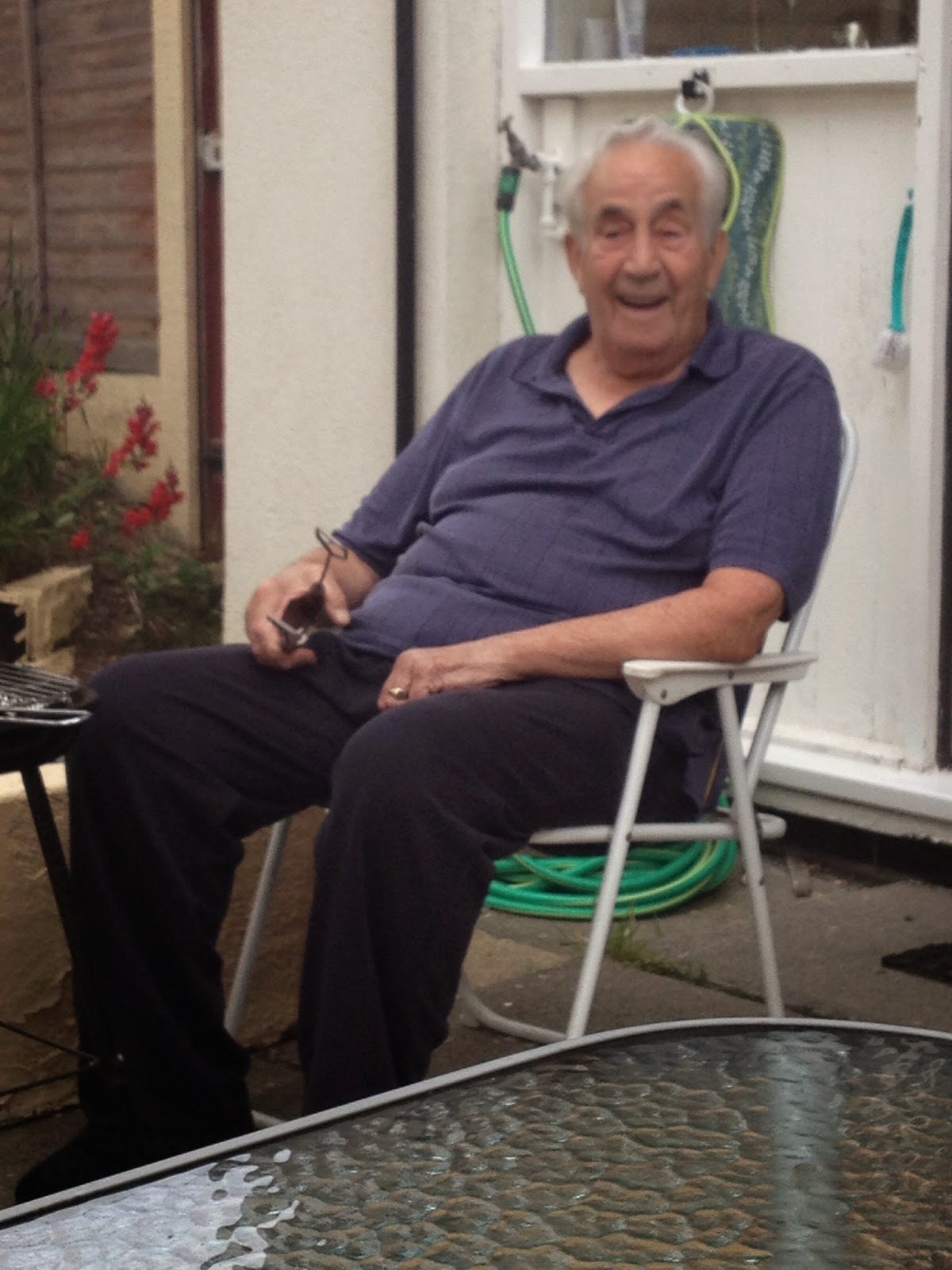
This is Mick, known to some as Michael, in the Army he was called Mac. I call him Dad. There he is barbecuing aged 88. Dad’s a lifelong Leeds Rugby League, now Leeds Rhinos, fan. He was at a very famous final in 1968 to see Leeds win a very close game in difficult wet conditions.

As I grew up, from a an early age he would take me to many Leeds games at Headingly and as a tradition we would go on Boxing Day to watch Leeds play at home. Dad’s love of rugby league and many sports rubbed off on me. He would talk about how fit players were and how important it was to look after your health. He encouraged me to be active, to play sport and to play team games. I played rugby through school and beyond. 


I'm convinced that Dad’s love of Leeds rugby league and the sport in general was a key reason I had such a positive experience of sport as young boy and as a young man.

Terry Flannagan, Chair of Rugby League Cares, talks about how people benefit immensely from their experience of rugby league. I definitely did.

The work of Rugby League Cares and the professional clubs’ charities and foundations understand communities, rugby league communities, like the one I grew up in, and they know how to bring the game and its positive image into people's lives to influence and improve health and wellbeing. Their work and their contribution is often unheralded. Hopefully we can shine a light more on their great work.

As Terry says the foundations are champions helping hundreds of thousands of people to lead healthier and wealthier lives. Rugby League Cares, the foundations and the ground breaking mental health work of State of Mind are ambassadors for the game and ambassadors for better health in rugby leagues game and its communities.

Whenever health is mentioned we usually think of the NHS. Health isn't the NHS. Health is something we own, our health and something the NHS plays a part in. But in talking too much about the NHS we talk too little about the difference the foundations, State of Mind and others can make and do make to people's health and wellbeing. Today is about bringing their work to the front more. I believe we the NHS can do more to promote and support their great work and the benefits of that will pay for themselves.

I think we should think of today in two ways, as a celebration of what's already been achieved and as a challenge for 2015 to achieve even more.”

The event went very well and there was a real energy about the possibilities of promoting health through rugby league’s connection with its grassroots communities.

I found something really interesting during the day and the notion has stayed with me since. It links to these lines from my opening welcome; ‘Whenever health is mentioned we usually think of the NHS. Health isn't the NHS.’

A number of people came up to me and said that comment had really struck a chord with them. As one person said to me, “If there’s one message I will take from today it’s that health is my health, not something the NHS will sort out when I get ill, but something for me to look after. I’m responsible for my health and to sort it out before I get a heart attack, not wait for the NHS to fix something after I have one.”

I think we do, all too often, think of health as the NHS. This is symptomatic of the dependency model we have created over many decades. The NHS is a provider of healthcare, to people who need support when their health deteriorates or when we can protect against illness, for example immunisation.

Health isn’t the NHS, it is something we experience, we literally live and breathe it every day. We can’t control our health entirely, some accidents and illnesses can’t be foreseen or prevented, but we can improve our health significantly by taking as much responsibility for it as we can.

In trying to shine a light on Rugby League Cares, the Clubs’ Foundations and State of Mind at this recent event, we made a small attempt to nudge our collective thinking away from health is the NHS. The work of these charities (look them up) is phenomenal and they reach hundreds of thousands of people every year, helping people make better health decisions and get more active. They do a lot for small amounts of investment, so they are good value too.


If we are to provide care outside of hospital, if we are to provide health and wellbeing support that communities engage with, then the solution won’t be the NHS. It has a part to play, a very important role. However, the NHS has to work with and embrace partners and together we have to build a very different health offer. One that gives health back to people and moves it away from the dependency model of the NHS.

Tuesday, 22 July 2014

Leading by example

My latest blog is helped by the Chief Operating Officer at Oldham Clinical Commissioning Group, Denis Gizzi.

Denis doesn’t blog, many say he should, but he does offer great leadership insights.  I was lucky enough to be copied into a note he sent to his staff one Friday afternoon recently.  It neatly described how the CCG had worked with our community services to respond to a family’s concerns about the care provided to their relative. 

It was really well received and I asked him if he’d have any objections to me sharing it. I will let his words speak for themselves, please read below:

“Dear colleagues,

It's been a strange week, but I thought I'd do something I've not done before (and probably won't make a habit of), which is to share a couple of thoughts at the end of a busy week.

You've all heard my mantra on 'time to value' over the last 12 months and I know there is a healthy slice of polite acknowledgement.  Here is a local patient example I’d like to share: 

The family contacts me directly as they are worried and concerned about the lack of care co-ordination following the hospital discharge of a 94 year old gentleman with many co-morbidities.

The CCG team reacts. Clinical advice is sought. Community clinicians are engaged. Mistakes are corrected. Care co-ordination is put in place. The family are understandably anxious. Full assessment and care package in place within a few days.

The family contacts me again.  State 'we had no idea what a CCG was, we now know, the CCG has saved my father’s life.   This may be a little exaggerated, who knows.  What really matters is that 'time to value' has been demonstrated, it is real, it touches people’s lives, and it works because people care about bringing a resolution to an individual's problems as quickly as possible. Time to value? Yes it is very important.

I'm not going to pick out individuals for praise, it's a team effort. Some of these problems were resolved out of standard hours. It is noted and greatly appreciated.

So you see, it's not management mumbo-jumbo, it's what our public expect from us. They want us to make good decisions, act on them, and make change happen quickly. We are getting better at it, but clearly we need to do more.”

I just thought it was a great example of how leaders can show a commitment to staying true to what the public want to see in how we lead their NHS.

Friday, 27 June 2014

Opposites attract - listening to everyone's point of view

I have been learning more recently about polarity management.  I probably couldn’t do it justice to try and describe the theory here but it’s a simple concept once you understand it - read here or watch this video

I wanted to write about it as I think it’s key to managing change in a trust like Pennine Care. So I will talk about it as plain as I can, avoiding the theory bit.

If you think about relationships; can opposites attract?  Can a Marmite lover live and dine harmoniously with a Marmite hater (or other reputable yeast based spreads!)? Can a Manchester United fan live happily ever after with a partner who supports the noisy neighbours from over the way?

When I was thinking about this, whether at work or at home, there is always a need to understand someone else’s point of view, likes and dislikes, beliefs and values.  Essentially that’s the theory behind polarity management; you can’t work or live with someone unless people try to understand each other. Relationships don’t work unless there is some give and take.

Equally where someone states their point of view to the exclusion of hearing another’s, this will tend to push people apart. We have all heard the phrase, ‘poles apart’ where two people just can’t agree on some matter or other.

Putting it into practice 
So what does this mean for Pennine Care and how we manage our strategy and work with our staff in future years? This might sound barn door obvious, but we have to listen to and work with the views of our staff.

If as Chief Executive, I continually communicate the need for change, transformation, redesign and improvement but it’s not unreasonable that some staff may ask "what’s wrong with the work I do now?" Often the argument for change can be received as a criticism by those who value what works now.

In a recent workshop with Executive Director colleagues, we looked at the following polarities, or opposites of a type:
  • Change and Continuity
  • Competition and Collaboration
  • Team and Individual
  • Cost and Quality
  • Integration and Specialisation

In these areas, we discussed that there are positives and potential negatives or upside and downside cases.  So in the case for changing something, there are potential benefits, but equally some might argue that maintaining what has worked up to date has benefits. And you could put arguments for and against either change or continuity.

People value different things and if you don’t acknowledge that or understand that, you can frustrate, ignore even lose people in what you are trying to do. The polarities of how people view things are important, it is a tension I believe we should view positively and embrace.

The tension works something like this - if you argue for change with someone who values keeping continuity, you are likely to increase their focus on the negative aspects of change.  If you don’t value what works well now, you are likely to focus on the negatives of things staying the same.

“If it ain’t broke don’t fix it” or ‘Don’t throw the baby out with the bath water” are both phrases which reflect the views people sometimes express when discussing change.

Recognising the good 
So why am I blogging about this? The language of the NHS at present is packed full of change at scale, transformation, significant financial efficiencies, redesign, more generic care work is needed and so on. The financial challenges I discussed in my first blog have introduced a driver for change that is being continually pushed and one that’s often underpinned with claims of inefficiency in the NHS and the need to improve care.

But the more the NHS, leaders and commentators talk predominantly about the need for change, and focus on inefficiency to the exclusion of celebrating the great work that the majority of staff do every day, the more likely staff will be turned off by the prospect of change. Staff will start feel more and more the subject of change, rather than a participant in a dialogue about the future of their service.

And in Pennine Care we need to manage change well and be mindful we don’t throw the baby out with the bath water, or devalue someone’s hard work by talking about how we need to make things better through redesign and efficiency programmes.

I think we do need to change the way we run some services and some change, I anticipate, will be far reaching. However, rather than start with "These services need transforming and we need to save money" I want to start with "What are the really good things we do and how can we use the really good things as a starting point to talk about how we can take services forward?"

It will be challenging as the financial savings are steep. However, we can’t let the financial challenges drive us into making quick decisions on what our plans should be, without talking to staff, our patients and partners first. So we have to include staff and all of our stakeholders in our discussions and engage them in developing the plans to deliver our vision.

I hope this all makes sense. This week I signed off a programme which aims to engage each and every single member of staff in Pennine Care, around 6,000 people, to talk about the future and how together we will move forward. This will begin late summer through to early autumn and will continue throughout the next few years.

Using a range of methods, events, workshops, meetings, social media, intranet forums, we intend to work with our staff to build a shared narrative on future plans. It won’t be easy, there will be lots of different views! We will have to make some difficult decisions. I’m determined though, we will make our plans carefully, in close partnership with our staff and partners. Pennine Care is built by experienced staff who provide great care. We need their views and expertise to inform our future plans.

Comment below or tweet your thoughts to @MichaelMcCourt1

Wednesday, 28 May 2014

30 minutes on transformation and ideas for change

Ok, I have really been struggling to find the time to blog but I keep hearing how valuable people are finding it so thank you for your comments.  

I have just found thirty minutes and I have set myself a task to tell you as much as I can about our transformation programme in that time *closes door and slides down in  chair so no one can see me!*

Last week I spent nearly four hours with the executive team talking about the next phase of our challenge. We have since launched our vision and strategy but now need to work with our staff, service users, carers and partners to talk about the plans we need to develop and put in place… and let’s not forget we also have to find around £45 million of savings over the next five years.

The vision and the strategy are crucial to a successful future but all the plans in the world are meaningless if we don’t lead a well-run organisation now. I like the concept of high reliability organisations, which I think is derived from the aviation industry.  It also has been adopted and applied by many healthcare organisations.

Simply put, it promotes a culture of safety and learning from adverse events. I already think we do this well, but we can do even better and drive out variation and improve standards even more. Given the challenges we face, and the change we will have to go through, keeping this as a priority is key.

Every leader and all staff in Pennine Care have a responsibility to provide safe patient care and we all have a shared responsibility to not only spot problems but to develop solutions together.

A culture of safety means ensuring we are clinically-led. This can be challenging as clinicians, understandably, are often concerned about the impact on quality due to financial savings. Whilst it is challenging I believe the only solution is to work even more closely together and to share the responsibility to find the best plans to take services forward and reduce costs.

I also am of a view that we have to hold an ambition to improve services, even when facing £45 million savings plans. I don’t think we should just assume, give up or accept the notion that this level of savings will make things worse or reduce services. It will change services, yes, but £231 million (the pot left behind) is still a lot of income and we should work together to design a future that makes the best use of this investment.

I’m not wearing rose-coloured spectacles or being blinkered to the challenge, but if we put patients first then we have to drive to deliver the best possible change for them. We can’t change the financial climate we are in but we are in control of our attitude and approach to the challenges we face.

*Half way through the thirty minutes… tick, tick, tick!*  

We also talked about the vision and strategy. I am really pleased we have put together a vision and a strategy, including a plan on a page of our Service Development Strategy. This sets out our overall ambition rather than our detailed plans.  

Therefore, in the last 12 minutes of my 30 minute blog I’ll share some quick thoughts on what each of the transformation programmes could mean.  The transformation programme has seven steps:

Living well
This means promoting self-care and self-management, health literate and empowered patients. If patients can be less reliant on current care systems we may be able to change the way hospitals work and our community-based services are designed.

Living well may mean more care coordination, risk stratification, expert patient programmes and different team make up and skill mix and different provider models to deliver care.

Easy access
Better co-ordinated access is something many patients ask for. In Oldham we are working with Age UK to appoint four ‘Promoting Independence in People (PIP)’ workers, who will help patients to navigate through the system to become empowered in managing their own health and care needs.

This has meant changing our multi-disciplinary teams and having different non-professional workers join from the voluntary sector. It is just one example of how we are doing things differently and better.

Whole person care
I have a view that parity of esteem in mental health means better physical care for people with mental illness, as well as better psychological care for people with physical health conditions. This aspect of a person’s care is still barely featured in models of care.

Cognitive Behavioural Therapy (CBT) or psychoeducation should be a standard aspect of our care pathway for long term conditions and means making sure our staff are more broadly trained.

It also means we need to bring our mental health and community teams closer together, providing integrated care to each patient.

Places that work
Our care should be provided in the homes of people we care for or as close to their homes and families as possible. This means we need to organise services around our local communities and neighbourhoods, not around professional groups or disciplines.

It doesn’t mean losing professional identity, we need strong clinical voices, but delivering locally with primary care, social care and community resources.

Better use of technology
I could write on this alone but I’d rather ask a question - how much does technology play a part in the care you deliver in your team? And do you use the latest technology in your team?

I know the Trust has a responsibility to put this in place and we are doing this with the PARIS clinical system, but do you drive it forward in your teams? How modern are you in your thinking on different ways to deliver care?

I would put forward that rather than digital by design, nurses and health care professionals should be working digitally by prescription. The application of technology should be a common feature of assessing someone’s needs, as you would for wound care or medicine.

Fewer buildings
Buildings are expensive and I’d rather work differently and invest in staff than bricks and mortar. The problem is buildings are also a hard habit to give up, but we have to reduce the cost of office space.

Where we have buildings we should open them up to communities and interested groups when we aren’t using them. We often leave an expensive building empty in the evenings and at weekends, when community groups would love to have some space to meet in.

Different ways to deliver care
We have to think broadly what this could mean? Different ways of delivering different aspects of what we do, set up a social enterprise maybe? We have discussed this as one example. Some commissioners have a view that some of our services are uneconomic, I also think we could do some things better at a reduced cost. We have to find ways to deliver better value in some areas.

Bed-based care is a significant cost and some trusts are reducing their bed base. I think we have avoided going any further than our historical changes, for good reasons, but we should still have the conversation and look again.


I could go on and on considering what transformation planning might mean but I have run out of time!  What I will say in closing is that it is critical that we involve patients, carers, staff and stakeholders in developing plans to respond to our challenges, and that we must not lose sight of being a great place to work.  Pennine Care must still engage, recognise and reward our staff for the hard work, dedication and commitment they give every day.

We owe our staff both of those points to support them through the challenges we will face together.


Tweet your thoughts to @MichaelMcCourt1 or comment below. 

Friday, 4 April 2014

Improving quality in challenging times

I am often asked ‘why can’t you just use your surplus to make savings and protect services?’  which is a valid question I will try to answer.

The Trust's financial surplus in simple terms is there to both keep the Trust afloat (in the black not the red) and to pay for high cost projects to improve patient care (capital investment).  Our surplus each year is around £2 million and could never cover the level of efficiencies we have to make.  It is a one off sum of money (like money in a savings account), whereas the efficiencies are against spend each and every year (like reducing your outgoings at home). 

Rather than a technical explanation, I will give examples of how the surplus has benefitted staff and patients alike over many years:
  • The excellent ward improvements in Tameside and Stockport, completed in 2013, cost around £7 million, paid for from the Trust’s surplus.
  • PARIS and the roll-out of a modern information system, improving patient information and staff working practices has been funded from the Trusts surplus.
  • We enjoy high levels of maintenance and in-year improvements to our environment funded from the Trust’s surplus.
  • In the next few years we will refit/redesign/refurbish wards in Oldham, this will be funded from the surplus
Compared to 10 years ago, the majority of staff and patients now benefit from being in high quality environments. This couldn’t have been achieved without sound financial management, which is a reason why managing money well is an integral part of delivering excellent care.

Savings

Pennine Care isn’t the only Trust making savings, all NHS Trusts have to.  All Councils are having to make savings and very significant reductions in costs.  Commissioners (who buy our services on behalf of the public) are making difficult decisions on priorities in a climate of reducing investment and increasing demand. Everyone across health and social care is working with the challenge of reduced levels of funding and increasing demands for services.

This means commissioners are increasingly concerned with the value they get for each pound they spend, more so now than ever. Providers like Pennine Care, have to make our own efficiencies, under increasing scrutiny.  We have to ask, is the care we deliver the best possible within the most efficient cost envelope?

If commissioners can’t be convinced of the value and productivity of what we provide, there is every chance they will stop buying it, or buy it from someone else. There has never been a more important time than now to be able to demonstrate that what we provide is effective and good value. Commissioners are now guided to use competition to test for value and that’s why we have so much activity around tenders for services we already operate.

Focus on patients and quality

Whilst I didn’t welcome the financial crisis, I very much welcome the patient focused debate that has been generated as a consequence of economic upheaval. Every pound spent has to buy something effective and efficient, and we have to drive out any variation or inefficiency.

I heard a patient story recently, from a daughter about her mum. Mum had had more than one stroke and lived alone, she needed a lot of care to support her. It wasn’t great to hear that the disjointed care was in part delivered by Pennine Care. What was great was how we fixed it once they raised their concerns. Their concerns? Multiple practitioners and agencies going in to provide care to mum, with no one speaking to each other. Disjointed, unproductive and at times unhelpful care. That isn’t efficient or effective.

I use that as an example of where we need to make changes and improvement. I do know that we deliver excellent care more often than not and that staff are hard working. But, in the current climate can we always demonstrate that? Do we communicate it well where we do provide excellent care? I don’t think we do sufficiently.

And that’s where the new vision and strategy will come in, when it is launched this month. It will set out what we believe everyone wants in terms of excellent care, it will describe what we think success will look like, based on what staff and stakeholders have told us.

Whole system change

It’s not just our challenge either. Rob Webster, the new Chief Executive of the NHS Confederation has recently said NHS Chief Executives need to lead outside of their organisations and lead across systems. What he meant by that is that we all now have to look beyond Pennine Care, beyond our usual NHS borders, and form new partnerships to deliver better and more efficient care.

And Pennine Care’s collective challenge in all of this? As every pound spent has to be spent well, we all need to demonstrate that what we provide works and how we deliver it is good value. I’ll write more on that in the future, but that’s why I started blogging about money to acknowledge that the current climate can make things tough. But also to set out that the reality that we must ensure we deliver evidence-based care, consistently and at the most efficient cost possible.

I think the journey we are on is one of improvement and there is the real prospect of exciting change and redesign. It will be challenging but I truly believe care will improve as we work through each step together.

With two posts on money done, next time more on our vision and strategy.

Michael

Twitter: @MichaelMcCourt1