Showing posts with label Michael McCourt. Show all posts

Tuesday, 2 February 2016

Time to grasp the nettle

I recently attended a retirement lunch for one of our mental health Clinical Directors and naturally we talked about the challenges ahead at a time where we have the Devolution Manchester Strategic Plan, a GM mental health strategy and a national mental health strategy all emerging. We shared a sense of great optimism, whilst recognising the challenges ahead will be, well, challenging.

It struck me that whilst moving forward, we still need to look back and not forget what we have done well and should celebrate and learn from our achievements but if ever there was a time to grasp the nettle, it’s in 2016.

Working together  

If 2015 was all about strategic development then 2016 should be about implementation.  This year will also be about partnerships and new ways of working together across health and social care.

But if I was to look back, what partnerships have we developed that have taken care forward and what have we implemented to do things differently?  In mental health specifically, what developments can we learn from to inform our plans for the future?

If we are to change the way we deliver health and social care to address the challenges set out in the GM Devolution Strategic Plan, what are the key two or three things we need to do differently in 2016 and beyond?  To achieve difference we have to do different.

Pennine Care launched its whole person care strategy in 2014 and I’m pleased to say that it remains relevant today and reassures me that our ambitions were the right ones.

The NHS England Five Year Forward View talked about a broad consensus on what the future should like for healthcare. Pennine Care’s strategy drew on that, as well as the voice of our staff and those who use our services. The Devolution Strategic Plan endorses much of our strategy but also sets a bigger picture vision and stretch challenge for providers to develop evermore far reaching plans, in partnership with others.

When thinking about partnerships, I look back and can see we knew then it was important that we changed the organisation and started to deliver through 'place and people', not through Pennine Care the ‘Trust’. We have still some way to go but it does mean that over the last two/three years we have been on this journey, we are comfortable working in places, with partners and developing local care organisations together. We bring to the table a strong track record on managing quality, safety, money and large groups of staff, blended locally according to the needs of each town.

Partnerships in practice

For instance in Oldham, we have worked with primary care, social care and voluntary partners to establish an independently chaired Care Consortium.  It was important to bring agencies together to promote innovation and I believe we have delivered some real change.  We are currently undertaking an evaluation of the work and will publish this over the coming weeks.

Around 25% of the Greater Manchester population have a mental health and wellbeing issue and as a GM economy, we spend more than £1bn on long term conditions linked to mental health.  So I feel very enthused about the opportunities to improve mental health care across Greater Manchester.  There are more leaders coming together than ever before and more commitment too.

The three NHS providers responsible for the majority of mental health care in GM are starting to collaborate more, such as across specialist services and supporting the acute mental health pressures facing the city. This has ranged from rapidly opening additional beds, to putting capacity in the system, through to setting up psychiatry liaison services to help with hospital pressures.

In Stockport, we have worked with commissioners and Stockport NHS Foundation Trust to set up a new ground breaking facility, called Saffron Ward.  Saffron provides intermediate care for older people with delirium, who often don’t get the care they need when in hospital. This ward, linked to our RAID services, brings people from the acute hospital setting and provides an integrated care pathway, to provide treatment and care. We have found patients and their families really value this bespoke care, the outcomes are better, older people retain more independence and it has significant financial benefits over the costs to run the service.

Through these examples I hope to show that partnership working has many faces, local partnerships, partnerships with different types of providers and between trusts with common care pathways.  In our recent experience, we have learned to listen, engage and find ways to work with partners that helps everyone feel on board and with a voice to influence how we develop services. This principle of co-production will be key to our future success.

Putting people first

So far I haven’t included the most important partnerships of all… the most significant shift in how we plan, deliver and operate care will be through the partnerships we develop with patients, carers and wider communities. Changing the way we deliver health and social care, will only work if we can change the way people use services and how they look after their own health.

I am very optimistic we can and the work Pennine Care has done through My Health My Community has seen a substantial change in our approach to care. At its heart, MHMC is a living well academy, a self-care resource and a movement towards self-management at scale.  Importantly, the self-care resources and support programmes are entirely co-produced with service users and carers, from ideas, through to development and delivery. 

The NHS has a long standing history of great care, I am proud to be a part of it and my 31 years as a nurse, a leader and now a Chief Executive. However, we have to move away from 'doing to' patients and start working with people and their communities.

As a Trust we know we haven’t got it all right, there is much to do, but for 2016 onwards our staff have partnership working, place-based delivery and whole person care as three key driving principles. Importantly, we can adapt how we work this way wherever and however the local conditions are set. Even more importantly we are changing how we relate to an individual’s care. Across all providers and with all staff, we will need to be both open minded, flexible and progressive as we move forward together.

New models of care and mental health 

The examples I have outlined show how we are developing an alternative narrative to hospital care. Hospitals do great work, but they are busy and under pressure. Local care provider arrangements have to build better and alternative care models to the offer we currently provide. But we can’t just say it needs to happen, we have to make the case for it and demonstrate propositions that we can confidently invest in, knowing it will help reduce hospital pressures and keep people out of hospital-based care.

We must be able to measure, demonstrate and show the benefit over cost of the new care systems we are building and so health economic modelling, such as that undertaken by Pennine Care, is increasingly an integral part of how we plan and implement care.

With new models of care, I still think we underestimate the importance of mental health and how good mental health care can have far reaching benefits. In 2016 we are in a much better place than when I started my psychiatric nurse training in 1984. Back then ‘psychiatric patients’ were viewed negatively, a significant amount of care was provided through large asylums, the media often portrayed people with mental illness as dangerous and talking about your mental health problem was largely still a taboo.

Today, the vast majority of care is provided in community-based settings, most often in people's own homes.  Many patients prefer to be described as service users and have far greater involvement in planning services and their own care than ever before. I would never try to say we have arrived, we still have a long way to go, but we have travelled an incredibly long distance in the right direction. 

We now have national campaigns such as Time to Change, issues on mental health are much more accepted in the media with substantially more positive reporting. Whether it’s through soap operas such as Coronation Street or EastEnders dealing sensitively with mental illness or well-known celebrities talking about their own mental health, the stigma associated with mental illness has dramatically reduced. However, it is still there, it is still a problem and we must do more.

I believe education on mental health is at the core of further reducing stigma, I think it’s at the core of delivering better health services overall. So education is key and specifically we must ensure we are acting on the evidence that demonstrates good mental health care leads to better health overall.

For example, back in 2011 the London School of Economics published a review of the evidence for good mental health care and wider health and economic benefits. The Kings Fund have also reported on the benefits of better mental health for people with long term conditions and its health economic benefits. 

The new Greater Manchester strategy also draws together the known benefits of good mental health care improving physical health and the need for good physical care for those with a severe and enduring mental illness. The body of evidence is substantial yet the investment in and integration of good mental health care in all care, remains patchy at best.

A five year forward view across Greater Manchester

This could be a blog in its own right, a book even!  I thought I would close with some key features I would like to see in place by the time we get to 2021. These are just a few examples based on where I think we need to make substantial progress: 
  • All people with health care needs having their own self-care/self-management plan and feeling in control of their care
  • Less hospital beds and more virtual beds, in people’s homes, supported by technology, care coordination and support for carers
  • Mature partnership working and collaboration, between healthcare providers, primary care, social care, third sector, housing, employment and wider
  • A collaborative system for Greater Manchester which unifies mental health care standards but delivers through local integrated models of care
  • Psychological care and mental health care at scale where it can help reduce hospital usage, improve physical healthcare outcomes and help prevent future health problems
  • A vibrant third sector and leisure sector leading on prevention and wellbeing and helping communities become more active and healthy
  • Increased prosperity across the city region and better employment prospects for those who we don’t adequately support now, specifically those with mental health needs
  • A recognised standard care offer for people in their own homes or communities, a hospital system with the time to care and reduced pressures, with far reaching programmes of health prevention and education
  • Better care and prospects for young people and support to families to give young people the best chance in life

I could go on, but I don’t need to as this is a good time for Greater Manchester. There is a shared view on what the right things are that need to be done. The trick now is selecting the two or three most important things (that will deliver the most impact) to start with in 2016 and build from there as we work towards 2021. 

I’m looking forward to being a part of it and hope you are too... 

Michael 

Wednesday, 23 December 2015

Recap of 2015 and thoughts for the New Year

As 2015 draws to a close, I thought it would be a good opportunity for some reflection over the last year and a look ahead to what’s to come in 2016.

Nationally, 2015 brought some major developments for the NHS, with NHS England starting to implement changes outlined in the Five Year Forward View.  This saw new ‘vanguard’ models of care being set up across the country to test out new ways of delivering care.  Pennine Care is a partner within the Stockport Together vanguard programme and we are keeping a close eye on developments around the country to see what models are proving to improve quality and reduce costs.  It’s likely that more test sites will be set up in 2016 as the first wave of vanguards start to produce the goods.  

This year, Greater Manchester was the first ‘city-region’ to be given greater decision making and budgetary controls over health and social care through the devolution agreement.  This has been a major programme of work since February and I personally have invested a great deal of time working with the central devolution team and Chief Executive colleagues within the NHS and Local Authorities to develop plans to radically redesign health and social care services.  This has culminated in the publication of a Strategic Plan for health and social care across Greater Manchester. 

Devolution will continue to be a key focus throughout 2016 and will inevitably result in considerable change for providers of health and care services, such as Pennine Care.  I will continue to be involved in GM devolution with the aim of ensuring community and mental health care has as much prominence as the acute sector in addressing future challenges and solutions.  This is recognised as part of the strategic plan, but it is part of my job to keep it high on the agenda.

We have had some major successes this year which we should be proud of.  At times of considerable challenge and change it can be easy to overlook all the good work that happens each and every day.  Of course I can’t mention them all, but would like to say a genuine thank you to all of our staff and supporters for their continued hard work and contributions.   

Significant highlights include:


We promote the good work of our staff and services throughout the year, so please take some time to look over the range of good new stories posted on the Trust website.

That’s not to say things aren’t difficult out in services, I know that staff are working tirelessly to deliver high quality patient care and at the same time resources are being squeezed as we have to make financial savings year on year.  I can’t promise that things are going to be easier in 2016, we still have savings to make and demands to meet, but as a Trust we will endeavour to listen to and support staff through these challenging times.

Looking forward to 2016, there are going to be some key priority areas we need to focus on as a Trust, these include:

  • Preparing ourselves for a CQC inspection, likely to be late Spring or early summer.
  • Making sure our services are safe and sustainable, with a major new programme being launched in the year.  It includes developing a new 5-year strategy for the Trust.
  • Focusing on integration and partnership working within our towns.
  • Continuing to support patients to avoid hospital wherever possible and helping them to take more responsibility for their own health and care.
  • Being a key player within Greater Manchester Devolution.
  • Continuing to implement the Paris clinical information system (Emis for Trafford).  
  • Improving the quality of data and reporting for all services.
  • Responding to tenders for existing and new services.
  • Continuing to campaign for parity of esteem and improved investment in mental health services.

I will continue to provide you with updates on these priority areas at key times throughout the year, using my blog, twitter account and staff communications channels.  But if you have any feedback for me please email: ceo-penninecare@nhs.net 

I’d like to thank you again for your support throughout 2015 and wish you well for the festive season and New Year.

Michael 

Monday, 19 October 2015

Progress, opportunities and challenges ahead

We recently held the Trust's Annual General Meeting and Principles of Care Awards.  It was great to see more than 200 people there, staff in the main but Governors, members, commissioners and supporters too. 

The AGM is an opportunity to look back at the progress we have made over the last 12 months, whilst also looking forward to the year ahead and the opportunities and challenges that presents.   These things can be a bit dry at times, but we try to keep the presentations informative and concise, whilst delivering some important messages that I want to ensure all staff hear.  

On reflection

As I approach two years being in post, and with last year 2014/15 my first full year in post, I thought I would share a brief reflection on my time as Pennine Care's Chief Executive. At a time when many reports in the media say how difficult and unattractive Chief Executive roles are, for me it remains a privilege and I continue to carry out the role with great pride. I am always mindful that the number one aim of my job is to support staff and help them provide the best care possible. It is probably the most challenging time the NHS has ever faced, it is definitely the most challenging time in my 31 years in the NHS.

And despite the challenges we face, I am humbled on a regular basis by the continued hard work, commitment and care provided by all of the staff I meet as I go about my work. It reminds me each time of the importance of doing the best I can to support dedicated staff, who just want to provide the best patient care possible. I thanked everyone at the AGM and I just want to repeat that thanks here, to all the staff of Pennine Care and those who work closely with the Trust. 

Community care

Our community and mental health services provided care to patients across our six boroughs nearly 2.5 million times last year.  This is a phenomenal figure and shows just how hard our staff are working day in and day out to meet patient needs, during times of increasing demands and pressures.  So thank you to each and every one of you. 

One of the main aims of most of our services is to keep patients from having to go in to hospital, by providing high quality care at home or within the community.  We also have services that allow people to return home more quickly when they have been in hospital.  Not only is this better for the patient, it also delivers cost savings, which is so important in these times of financial challenge we find ourselves in.   

We have recently undertaken an economic evaluation of some of our key services in this area - Butler Green in Oldham, Saffron Ward in Stockport and the Psychiatry Liaison (RAID) service – and together they have achieved 23,164 deflections from hospital and saved the economy £4 million in acute costs in one year alone.   Imagine what could be achieved if we could expand this across all of our towns and even Greater Manchester, which is what we aim to do as part of the Greater Manchester Devolution programme. 

We have also been working closely with commissioners in our towns to implement more integrated approaches to community-based care, involving partnerships with a range of providers and moving towards services working together in neighbourhoods.  This will continue to be a key theme moving forward in order to meet commissioner expectations and deliver our cost and quality improvement strategies.

Staff engagement

Staff engagement has continued to be a major focus over the last year, and of course we made the HSJ and Nursing Times Best Places to Work list.  This is based on the results of the NHS Staff Survey, taking staff feedback to directly measure performance in relation to a number of different areas.  This year’s survey is now out, so please take the time to respond.

Quality

Dr Henry Ticehurst, our Trust Medical Director, gave us an overview of the progress that has been made with regards to quality and clinical leadership.  Ensuring the clinical voice is well represented within Pennine Care is essential and the Nursing and Healthcare Professionals Council and associated groups is a key enabler of this and continues to be a growing force within the Trust.  The Care Quality Commission (CQC) placed Pennine Care in the ‘lowest rate of concern’ as part of its new Intelligent Monitoring programme.  Pennine Care was the only mental health provider in Greater Manchester to achieve this rating, which is a testament to our high standards of care and patient safety.

Finances

Martin Roe, Exec Director of Finance, also gave a sobering overview of the annual accounts which basically showed that although we have been able to deliver our required financial savings year on year, we realistically only have one more year where financial balance can be achieved.  Martin described 2016/17 as being ‘a watershed year’ both for the Trust and the NHS as a whole, as providers continue to struggle to meet the required efficiency targets set by the Government.  Pennine Care’s overall target is £47.5 million over five years.  Our target for this current year is £7.6 million, which we are forecasting to achieve but this then jumps up to £10 million for the years thereafter, which is much more challenging. 

Principles of Care Awards

To end on a lighter note, I would just like to acknowledge the fantastic achievements of the winners from the Principles of Care Awards.  A video of the winners from each division was shown on the night, which were truly inspirational and remind you what it’s all about – caring people delivering the best care possible to people who need it.  All of the videos are now on the Trust’s YouTube channel, so please take some time to watch them and I hope you find them as moving as I did.  Particularly congratulations to the highly commended Bury learning disabilities dementia team, and the Bury children’s diabetes nurses who were named overall winners. 

The presentation slides from the evening are on the Trust website if you want to review them, or watch this short video clip from the event: 


Thank you

Michael
Twitter: @MichaelMcCourt1

Tuesday, 26 May 2015

National direction set

The NHS Confederation last week published a letter to the Prime Minister, David Cameron, to urge the Government to provide political will and financial backing to secure the future of hard pressed NHS services.  This was co-signed by 50 leaders in healthcare, including me.

The publication of the letter coincided with a major speech from Mr Cameron (link) and Chief Executive of NHS England, Simon Stevens (link).   

The overarching themes from these speeches was further commitment to implement the Five Year Forward View, making a 7-day NHS a reality, greater focus on healthy lifestyles and prevention and treating mental health with equal importance as physical health.  The Government has pledged to provide the NHS with an additional £8 billion in funding by 2020, but this is in the context of the NHS still needing to find £22 billion in efficiency savings. 

The level of change and challenge facing the NHS will continue to be significant, but we now have a clear sense of direction and purpose at a national level, guided by the Five Year Forward View.  On a more regional level, Greater Manchester is progressing plans for the devolution of health and social care from central government to the city region.  

At a Trust level, Pennine Care continues to be a high performer in terms of both quality and finance.  However, we still need to achieve £47.5 million in efficiency savings over the next five years to contribute to the overall NHS target of £22 billion.  This will be tough at times but we must ensure that the care and safety of our patients and the wellbeing of our staff are at the forefront of any changes we make.  We are now engaging with our staff widely on developing plans for the future and I would encourage all of you to get involved. 

I would encourage you to read these when you can as it will help to give you a sense of direction for the NHS over the next five years.  We will of course provide regular updates about how these changes will impact our frontline staff as it becomes clear. 

Thank you
Michael 

Wednesday, 15 April 2015

Video blog Q&A - April 2015

My first video blog (or vlog as they are also known I am told) is now ready for viewing!  

Thank you to the members of staff who sent in questions, I have tried to summarise and answer them in this video, but there were quite a few so there will be another video blog coming soon too.  

It's the first time I have done a video blog and was a bit hesitant about being on camera, but hopefully it helps to answer some of your queries. 

In this Q&A I talk about what the Five Year Forward View means for us at Pennine Care, how we are supporting hospital pressures, why partnership working is so important, what whole person care means to me, integration of community and mental health services and what's the one thing I would like us to focus on as a Trust. 

It's only seven minutes, so not too long.  I would really like to hear your feedback and further questions. This is all part of building our communication and engagement with staff and partners so we can plan together for the future.

Thank you,
Michael 


Thursday, 5 March 2015

In the vanguard of new ways of delivering care

I thought I would do a quick blog to tell you about the latest developments with the NHS England Five Year Forward View or 5YFV as it’s now affectionately known. 

You may have read that NHS England are now looking to develop vanguard sites as part of a 'new models of care programme'.  This is being led by Samantha Jones at NHS England, with the intention of providing a ‘proving ground’ in a number of areas, accelerating development of integrated care.   

The vanguard sites then become templates from which the rest of England learns. This spread and share approach is intended to address the challenges we face in health and social care at pace and scale. Sounds straightforward enough but England faces a challenging five years ahead.

There is a detailed document online about how the 5YFV will be put into action, but look at page 9, 3.3 if you don’t have time to read the whole document, but it is worth a full read

I read through the criteria for applying to be a vanguard site, you had to apply against one of four categories - multispecialty community providers (MCPs); integrated primary and acute care systems (PACS); additional approaches to creating viable smaller hospitals and models of enhanced health in care homes.

I couldn’t see how we fit into any category. I knew we would be part of submissions in at least three of the towns we serve, as part of the partnerships in those towns. However, because I feel we are to an extent uniquely placed as an organisation and because we are pushing so much to transform and advance care, I put one in anyway on behalf of the Trust. To our surprise we were short listed to attend workshops for a final selection process.

I think the staff in Pennine Care should see this as an achievement in itself, 269 areas applied and this was short listed down to just 63. So yesterday Katy Calvin-Thomas, Henry Ticehurst, Richard Spearing and I went down to London to present to the third and final day of the workshops. 

Here is our original submission - please do read this in particular as I think it captures where we are up to as an organisation. It also shows our latest thinking and just how exciting the challenge is we face. Yes exciting. I think we are truly in the vanguard of new ways of providing care. That’s why I put the application in and it was great to be shortlisted.

I’d be surprised if we were selected to go right through to be a vanguard site, as our submission didn’t easily fit. Also, I didn’t think our ‘pitch’ (a seven minute presentation) went very well. I became a bit tongue-tied and nervous trying to squeeze a broad ambitious agenda into a few sound bites. Katy, Henry and Richard rescued it well and I recovered for the question and answer bit. 

I am sharing my experience, which was personally a bit embarrassing, because I think it goes with working outside of our comfort zone. In Pennine Care, many of our staff and leaders are working outside of their comfort zone, working hard under pressure and really pushing the delivery of new and different services. I am grateful for all the work and success to date, its making a real difference to improving care and helping people live as independently and empowered as possible.

Nothing ventured, nothing gained I suppose. And whilst we might not become a first wave vanguard site, we still have an important role to play informing the agenda for new models of care and also the new Devolution Manchester work developing care out of hospital for the city region.

As we always say though, the single most important agenda is getting it right in Pennine Care, that's with partners and working well with staff and patients to deliver new integrated models of care. After yesterday, listening to some really excellent presentations, I know we are definitely on the right tracks and in some areas ahead of the game. Our staff can rightly feel proud of what they are achieving in the pursuit of improving the health outcomes of the communities we serve.

I do think that NHS England and the new models of care programme should be congratulated for the approach taken to securing vanguard sites. There was some criticism of the process, around how the voting worked, whether it was a fair approach but it was a lot fairer than years gone by, when decisions were made behind closed doors and within networks that weren’t accessible. 

I spoke with Samantha Jones afterwards and she was open and interested in the work we are doing in Pennine Care. NHS England Chief Executive, Simon Stevens, sat and chatted through our challenge with Richard Spearing. Jackie Lynton Head of Transformation at NHS Improving Quality wants to support our work on diversity and Rob Webster, Chief Executive of the NHS Confederation, has shown great support to the Trust. We are in a more open, transparent and involving era, the playing field is ever more level and I think we should applaud the positives in that.

Coming up next time, a video blog (or vlog), where I expand more on the challenges we face going forward. 

I miss my comfort zone!

Michael 

Wednesday, 19 November 2014

The importance of the flu jab

Please read this important 'guest' blog from our Medical Director Dr Henry Ticehurst.

As Medical Director for the Trust, I want to reinforce why it is vital for every member of staff to have the flu vaccine.

I had my flu vaccination on October 13. If you haven’t had it yet, this is a message from me to ask you to do so.


The rationale for the vaccination is clear and it has a strong evidence base.

Influenza is a nasty illness and, for normally healthy people, it can confine you to bed for some time. This in itself has massive potential effects on the services we run – we all know it doesn’t take too many colleagues to go off sick before we get in to some real difficulties.  But for those we treat - especially those with long-term conditions, the frail elderly and the young - it can be fatal.

We have a target of 75 per cent staff take-up. This is a national target and, again, it is not an arbitrary target.  It is set to afford our community maximum protection to ensure any spread is contained. So I am asking you to please be one of those 75 per cent.

You have all received details of vaccination sessions in your borough, along with instructions on how to let us know if you receive your vaccinations elsewhere.  

I know you are very busy but I’d urge you to have your flu jab to keep yourself, the people you work with and our service users in the best of health this flu season.

Staff can find more information about the flu campaign, including a list of sessions and a consent form on the intranet here.

So, to summarise, did I have severe side effects? Well, no, because you can’t get flu from the vaccine. A few snuffles, but to be honest I’ve had worse man-flu!
--
I hope Henry's note will prompt you to get your flu jab if you haven't yet. If you have, thank you, it really does make a difference. And don't forget if you're like me, with a son with asthma and elderly parents, it protects your family too. 

Friday, 12 September 2014

Thank you et Merci Beaucoup

Since I launched my blog back in April, I'm pleased to say that it has now received more than 5,700 views.  Whether that’s a glance through, a thorough read, received well or otherwise - a big thank you for taking the time to read it.

I hope my posts are helpful, especially for staff to keep in touch with my thoughts and where we are up to with current challenges and developments within the Trust.   

I have had mostly very positive feedback on the blog, from emails, comments posted on the blog, twitter and even a chat by the water cooler.  All feedback is welcome and I hope it encourages discussion within teams.

There has only been one or two negative comments, these are still welcome, we can only lead effectively if we hear the good and the not so good.  

These are challenging times and we are having to make changes, save money and at times make redundancies.  I know this can make it difficult and add pressure at work, I am aware of it and one of our strategic goals is for Pennine Care to be a great place to work.  

But as well as talking about these issues on my blog, I also want to use it as a way of highlighting the good work that I see happening around the Trust every day.  Despite the challenges, we mustn't forget to celebrate success.    

I am still really keen to hear your thoughts about the blog - either post a comment, send me a Tweet or email. 


PARIS  


The use of French within this post is my seamless link to talk about the roll out of PARIS, our new digital care record system.  Given we are going through organisational change, pretty much constantly somewhere in the Trust, I am so impressed with how staff have received the new system. 

Despite busy jobs, service changes and increasing demands, when I have met teams everyone has been committed to making the new system work. I think that’s because everyone knows it will improve patient care and ultimately how we work to deliver care. There have been some challenges, glitches and things we haven’t got right and staff have told me when I have visited. We need to hear when things aren't working so we can fix it and learn from it.

I just wanted to say thank you, or merci beaucoup, to all our staff on implementing the new system and for being so welcoming when I have come out to meet teams as they get to grips with the new system.  It's great to see large paper files being closed and consigned to the archives. The system will improve care, provide a platform for mobile working, but it will also surely save thousands upon thousands as we become a paper-light organisation.

Finally, I was really tickled to hear how the Community Mental Health Team at Sudden Resource Centre had launched PARIS in their service. I understand the office was aromatic with the smell of coffee, staff wore stripy Parisian tops, strings of onions around their necks and no doubt one or two "Allo Allo" style accents here and there (younger staff may want to Google Allo Allo or tune into Gold on your TV!). Well done to the team - I’m on the lookout for photographs of your first day with PARIS! 

Monday, 28 July 2014

Rugby League is leading health and wellbeing

We recently held an event at SalfordRed Devils ground in support of the charity, Rugby League Cares (RLC) and the great work of the charitable foundations across rugby league. The event was supported by Pennine Care, the Red Devils Foundation and the One Medical Group.

In Pennine Care, we believe health and wellbeing work is most successful when it is delivered in communities, in ways that make sense to local people. All too often we promote healthy messages, or health professionals tell people to stop smoking, drink less or lose weight, without truly thinking through how hard it can be to stop or change something to improve your health.

Rugby League Cares and the charitable foundations of rugby league’s professional clubs and State of Mind promote health and wellbeing – with a difference. Firstly, they know their communities and their communities know them. It opens doors and rugby league fans will listen to ambassadors from their clubs, maybe more than they would their GP. Secondly, to quote one of the speakers at the event, Professor Alan White, “there’s more to sport than sport”. Sport reaches people and communities in a unique way the NHS could never replicate.

Mike Farrar and Professor White spoke at the event about this. There’s more on sport and health here and here

There is an emerging evidence base for sport and how it promotes physical activity and improves health. We don’t do enough to promote this. It is this link that led me to be interested in working with rugby league partners to bring together the event, which aimed to launch the idea of ‘A Year of Health and Wellbeing in Rugby League’.

I was fortunate enough to open the event with my own personal experience and it went something like this…

“In welcoming everyone today, rather than talking about health policy or the work of the NHS, I just wanted to share a personal reflection on how the great game of rugby league positively influences people’s lives.


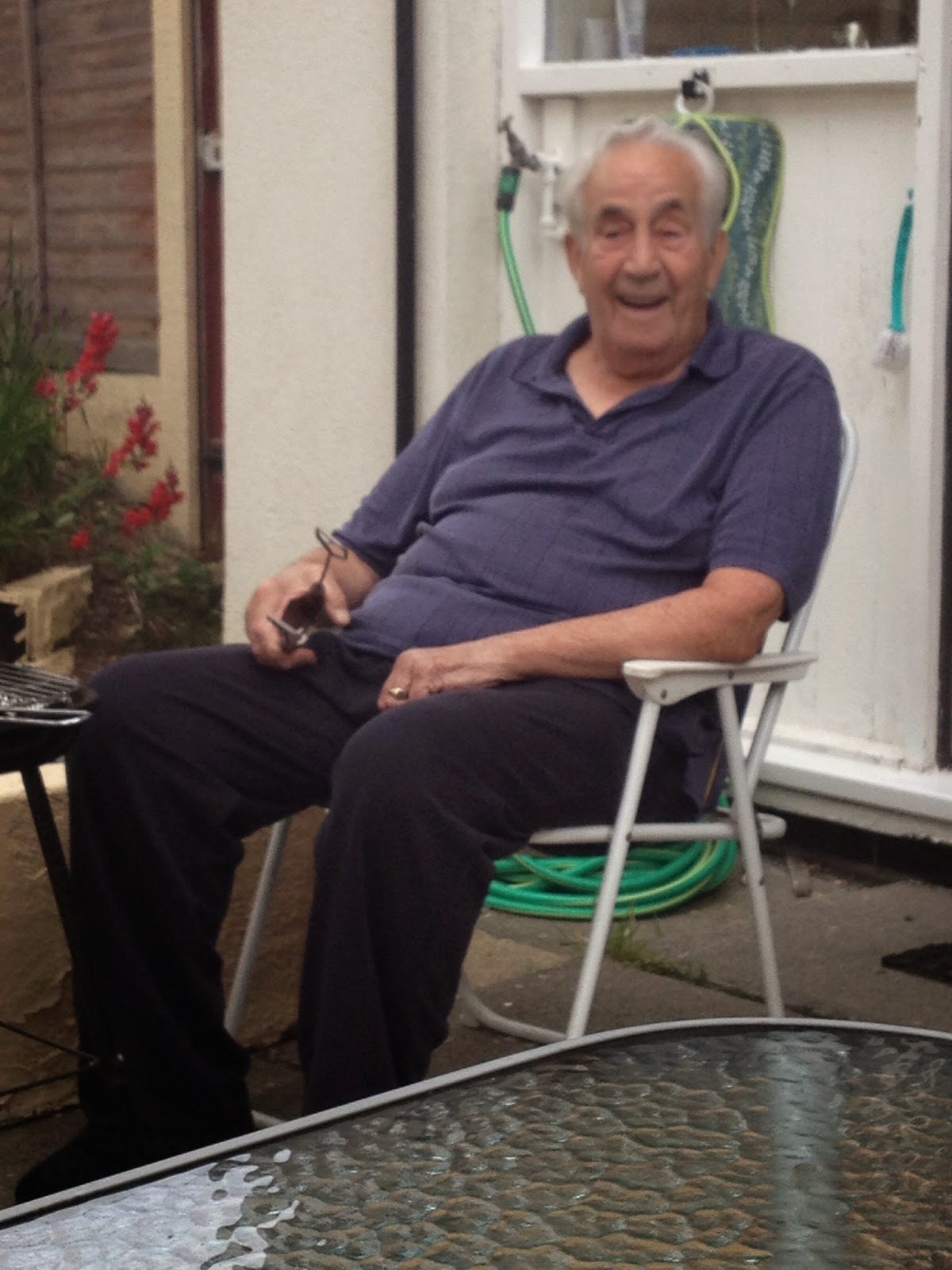
This is Mick, known to some as Michael, in the Army he was called Mac. I call him Dad. There he is barbecuing aged 88. Dad’s a lifelong Leeds Rugby League, now Leeds Rhinos, fan. He was at a very famous final in 1968 to see Leeds win a very close game in difficult wet conditions.

As I grew up, from a an early age he would take me to many Leeds games at Headingly and as a tradition we would go on Boxing Day to watch Leeds play at home. Dad’s love of rugby league and many sports rubbed off on me. He would talk about how fit players were and how important it was to look after your health. He encouraged me to be active, to play sport and to play team games. I played rugby through school and beyond. 


I'm convinced that Dad’s love of Leeds rugby league and the sport in general was a key reason I had such a positive experience of sport as young boy and as a young man.

Terry Flannagan, Chair of Rugby League Cares, talks about how people benefit immensely from their experience of rugby league. I definitely did.

The work of Rugby League Cares and the professional clubs’ charities and foundations understand communities, rugby league communities, like the one I grew up in, and they know how to bring the game and its positive image into people's lives to influence and improve health and wellbeing. Their work and their contribution is often unheralded. Hopefully we can shine a light more on their great work.

As Terry says the foundations are champions helping hundreds of thousands of people to lead healthier and wealthier lives. Rugby League Cares, the foundations and the ground breaking mental health work of State of Mind are ambassadors for the game and ambassadors for better health in rugby leagues game and its communities.

Whenever health is mentioned we usually think of the NHS. Health isn't the NHS. Health is something we own, our health and something the NHS plays a part in. But in talking too much about the NHS we talk too little about the difference the foundations, State of Mind and others can make and do make to people's health and wellbeing. Today is about bringing their work to the front more. I believe we the NHS can do more to promote and support their great work and the benefits of that will pay for themselves.

I think we should think of today in two ways, as a celebration of what's already been achieved and as a challenge for 2015 to achieve even more.”

The event went very well and there was a real energy about the possibilities of promoting health through rugby league’s connection with its grassroots communities.

I found something really interesting during the day and the notion has stayed with me since. It links to these lines from my opening welcome; ‘Whenever health is mentioned we usually think of the NHS. Health isn't the NHS.’

A number of people came up to me and said that comment had really struck a chord with them. As one person said to me, “If there’s one message I will take from today it’s that health is my health, not something the NHS will sort out when I get ill, but something for me to look after. I’m responsible for my health and to sort it out before I get a heart attack, not wait for the NHS to fix something after I have one.”

I think we do, all too often, think of health as the NHS. This is symptomatic of the dependency model we have created over many decades. The NHS is a provider of healthcare, to people who need support when their health deteriorates or when we can protect against illness, for example immunisation.

Health isn’t the NHS, it is something we experience, we literally live and breathe it every day. We can’t control our health entirely, some accidents and illnesses can’t be foreseen or prevented, but we can improve our health significantly by taking as much responsibility for it as we can.

In trying to shine a light on Rugby League Cares, the Clubs’ Foundations and State of Mind at this recent event, we made a small attempt to nudge our collective thinking away from health is the NHS. The work of these charities (look them up) is phenomenal and they reach hundreds of thousands of people every year, helping people make better health decisions and get more active. They do a lot for small amounts of investment, so they are good value too.


If we are to provide care outside of hospital, if we are to provide health and wellbeing support that communities engage with, then the solution won’t be the NHS. It has a part to play, a very important role. However, the NHS has to work with and embrace partners and together we have to build a very different health offer. One that gives health back to people and moves it away from the dependency model of the NHS.

Friday, 27 June 2014

Opposites attract - listening to everyone's point of view

I have been learning more recently about polarity management.  I probably couldn’t do it justice to try and describe the theory here but it’s a simple concept once you understand it - read here or watch this video

I wanted to write about it as I think it’s key to managing change in a trust like Pennine Care. So I will talk about it as plain as I can, avoiding the theory bit.

If you think about relationships; can opposites attract?  Can a Marmite lover live and dine harmoniously with a Marmite hater (or other reputable yeast based spreads!)? Can a Manchester United fan live happily ever after with a partner who supports the noisy neighbours from over the way?

When I was thinking about this, whether at work or at home, there is always a need to understand someone else’s point of view, likes and dislikes, beliefs and values.  Essentially that’s the theory behind polarity management; you can’t work or live with someone unless people try to understand each other. Relationships don’t work unless there is some give and take.

Equally where someone states their point of view to the exclusion of hearing another’s, this will tend to push people apart. We have all heard the phrase, ‘poles apart’ where two people just can’t agree on some matter or other.

Putting it into practice 
So what does this mean for Pennine Care and how we manage our strategy and work with our staff in future years? This might sound barn door obvious, but we have to listen to and work with the views of our staff.

If as Chief Executive, I continually communicate the need for change, transformation, redesign and improvement but it’s not unreasonable that some staff may ask "what’s wrong with the work I do now?" Often the argument for change can be received as a criticism by those who value what works now.

In a recent workshop with Executive Director colleagues, we looked at the following polarities, or opposites of a type:
  • Change and Continuity
  • Competition and Collaboration
  • Team and Individual
  • Cost and Quality
  • Integration and Specialisation

In these areas, we discussed that there are positives and potential negatives or upside and downside cases.  So in the case for changing something, there are potential benefits, but equally some might argue that maintaining what has worked up to date has benefits. And you could put arguments for and against either change or continuity.

People value different things and if you don’t acknowledge that or understand that, you can frustrate, ignore even lose people in what you are trying to do. The polarities of how people view things are important, it is a tension I believe we should view positively and embrace.

The tension works something like this - if you argue for change with someone who values keeping continuity, you are likely to increase their focus on the negative aspects of change.  If you don’t value what works well now, you are likely to focus on the negatives of things staying the same.

“If it ain’t broke don’t fix it” or ‘Don’t throw the baby out with the bath water” are both phrases which reflect the views people sometimes express when discussing change.

Recognising the good 
So why am I blogging about this? The language of the NHS at present is packed full of change at scale, transformation, significant financial efficiencies, redesign, more generic care work is needed and so on. The financial challenges I discussed in my first blog have introduced a driver for change that is being continually pushed and one that’s often underpinned with claims of inefficiency in the NHS and the need to improve care.

But the more the NHS, leaders and commentators talk predominantly about the need for change, and focus on inefficiency to the exclusion of celebrating the great work that the majority of staff do every day, the more likely staff will be turned off by the prospect of change. Staff will start feel more and more the subject of change, rather than a participant in a dialogue about the future of their service.

And in Pennine Care we need to manage change well and be mindful we don’t throw the baby out with the bath water, or devalue someone’s hard work by talking about how we need to make things better through redesign and efficiency programmes.

I think we do need to change the way we run some services and some change, I anticipate, will be far reaching. However, rather than start with "These services need transforming and we need to save money" I want to start with "What are the really good things we do and how can we use the really good things as a starting point to talk about how we can take services forward?"

It will be challenging as the financial savings are steep. However, we can’t let the financial challenges drive us into making quick decisions on what our plans should be, without talking to staff, our patients and partners first. So we have to include staff and all of our stakeholders in our discussions and engage them in developing the plans to deliver our vision.

I hope this all makes sense. This week I signed off a programme which aims to engage each and every single member of staff in Pennine Care, around 6,000 people, to talk about the future and how together we will move forward. This will begin late summer through to early autumn and will continue throughout the next few years.

Using a range of methods, events, workshops, meetings, social media, intranet forums, we intend to work with our staff to build a shared narrative on future plans. It won’t be easy, there will be lots of different views! We will have to make some difficult decisions. I’m determined though, we will make our plans carefully, in close partnership with our staff and partners. Pennine Care is built by experienced staff who provide great care. We need their views and expertise to inform our future plans.

Comment below or tweet your thoughts to @MichaelMcCourt1

Wednesday, 28 May 2014

30 minutes on transformation and ideas for change

Ok, I have really been struggling to find the time to blog but I keep hearing how valuable people are finding it so thank you for your comments.  

I have just found thirty minutes and I have set myself a task to tell you as much as I can about our transformation programme in that time *closes door and slides down in  chair so no one can see me!*

Last week I spent nearly four hours with the executive team talking about the next phase of our challenge. We have since launched our vision and strategy but now need to work with our staff, service users, carers and partners to talk about the plans we need to develop and put in place… and let’s not forget we also have to find around £45 million of savings over the next five years.

The vision and the strategy are crucial to a successful future but all the plans in the world are meaningless if we don’t lead a well-run organisation now. I like the concept of high reliability organisations, which I think is derived from the aviation industry.  It also has been adopted and applied by many healthcare organisations.

Simply put, it promotes a culture of safety and learning from adverse events. I already think we do this well, but we can do even better and drive out variation and improve standards even more. Given the challenges we face, and the change we will have to go through, keeping this as a priority is key.

Every leader and all staff in Pennine Care have a responsibility to provide safe patient care and we all have a shared responsibility to not only spot problems but to develop solutions together.

A culture of safety means ensuring we are clinically-led. This can be challenging as clinicians, understandably, are often concerned about the impact on quality due to financial savings. Whilst it is challenging I believe the only solution is to work even more closely together and to share the responsibility to find the best plans to take services forward and reduce costs.

I also am of a view that we have to hold an ambition to improve services, even when facing £45 million savings plans. I don’t think we should just assume, give up or accept the notion that this level of savings will make things worse or reduce services. It will change services, yes, but £231 million (the pot left behind) is still a lot of income and we should work together to design a future that makes the best use of this investment.

I’m not wearing rose-coloured spectacles or being blinkered to the challenge, but if we put patients first then we have to drive to deliver the best possible change for them. We can’t change the financial climate we are in but we are in control of our attitude and approach to the challenges we face.

*Half way through the thirty minutes… tick, tick, tick!*  

We also talked about the vision and strategy. I am really pleased we have put together a vision and a strategy, including a plan on a page of our Service Development Strategy. This sets out our overall ambition rather than our detailed plans.  

Therefore, in the last 12 minutes of my 30 minute blog I’ll share some quick thoughts on what each of the transformation programmes could mean.  The transformation programme has seven steps:

Living well
This means promoting self-care and self-management, health literate and empowered patients. If patients can be less reliant on current care systems we may be able to change the way hospitals work and our community-based services are designed.

Living well may mean more care coordination, risk stratification, expert patient programmes and different team make up and skill mix and different provider models to deliver care.

Easy access
Better co-ordinated access is something many patients ask for. In Oldham we are working with Age UK to appoint four ‘Promoting Independence in People (PIP)’ workers, who will help patients to navigate through the system to become empowered in managing their own health and care needs.

This has meant changing our multi-disciplinary teams and having different non-professional workers join from the voluntary sector. It is just one example of how we are doing things differently and better.

Whole person care
I have a view that parity of esteem in mental health means better physical care for people with mental illness, as well as better psychological care for people with physical health conditions. This aspect of a person’s care is still barely featured in models of care.

Cognitive Behavioural Therapy (CBT) or psychoeducation should be a standard aspect of our care pathway for long term conditions and means making sure our staff are more broadly trained.

It also means we need to bring our mental health and community teams closer together, providing integrated care to each patient.

Places that work
Our care should be provided in the homes of people we care for or as close to their homes and families as possible. This means we need to organise services around our local communities and neighbourhoods, not around professional groups or disciplines.

It doesn’t mean losing professional identity, we need strong clinical voices, but delivering locally with primary care, social care and community resources.

Better use of technology
I could write on this alone but I’d rather ask a question - how much does technology play a part in the care you deliver in your team? And do you use the latest technology in your team?

I know the Trust has a responsibility to put this in place and we are doing this with the PARIS clinical system, but do you drive it forward in your teams? How modern are you in your thinking on different ways to deliver care?

I would put forward that rather than digital by design, nurses and health care professionals should be working digitally by prescription. The application of technology should be a common feature of assessing someone’s needs, as you would for wound care or medicine.

Fewer buildings
Buildings are expensive and I’d rather work differently and invest in staff than bricks and mortar. The problem is buildings are also a hard habit to give up, but we have to reduce the cost of office space.

Where we have buildings we should open them up to communities and interested groups when we aren’t using them. We often leave an expensive building empty in the evenings and at weekends, when community groups would love to have some space to meet in.

Different ways to deliver care
We have to think broadly what this could mean? Different ways of delivering different aspects of what we do, set up a social enterprise maybe? We have discussed this as one example. Some commissioners have a view that some of our services are uneconomic, I also think we could do some things better at a reduced cost. We have to find ways to deliver better value in some areas.

Bed-based care is a significant cost and some trusts are reducing their bed base. I think we have avoided going any further than our historical changes, for good reasons, but we should still have the conversation and look again.


I could go on and on considering what transformation planning might mean but I have run out of time!  What I will say in closing is that it is critical that we involve patients, carers, staff and stakeholders in developing plans to respond to our challenges, and that we must not lose sight of being a great place to work.  Pennine Care must still engage, recognise and reward our staff for the hard work, dedication and commitment they give every day.

We owe our staff both of those points to support them through the challenges we will face together.


Tweet your thoughts to @MichaelMcCourt1 or comment below.